



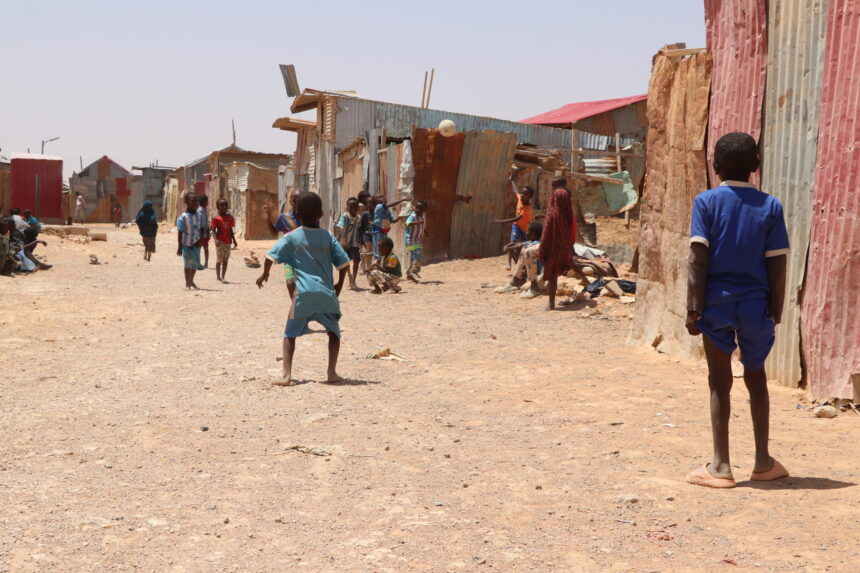
The summer winds sweep fiercely across the area, filling the air with dust and making life even more difficult for displaced families. This is a displacement camp on the outskirts of Garowe, the capital of Puntland, Somalia. Known as Shabelle Camp, it is home to an estimated 50,000 people, most of whom were displaced from southern Somalia and the Somali Regional State of Ethiopia due to drought, conflict, and climate-related shocks.
Families live in self-built shelters that offer little protection from heavy rain and strong winds, particularly during the summer months from June to August, when such weather conditions are common.
Children living in the camp also face serious barriers to education. Two schools operate in the camp, having previously been built and supported by humanitarian organizations. However, external support has since ended, forcing the schools to charge fees that many displaced families cannot afford. The schools also lack adequate learning facilities, including sufficient classrooms and educational materials.
As these families continue to live in emergency conditions and struggle to meet their basic needs, they are unable to afford their children’s education. As a result, hundreds of children who have reached school age have been unable to access education, while many others are at risk of dropping out and being unable to continue their studies.
Beyond the lack of formal education opportunities, the camp has no Early Childhood Development (ECD) facilities, particularly Early Childhood Education (ECE) services, despite being home to thousands of children between the ages of 0 and 8. ECD, and especially ECE, has received limited priority within humanitarian education and child protection responses.
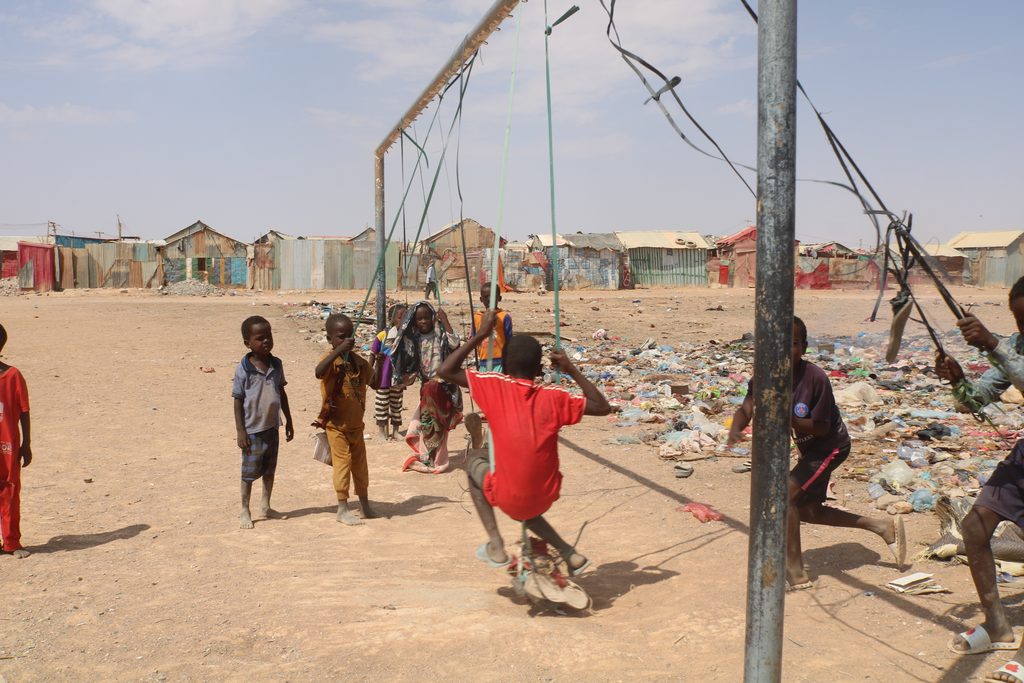
Humanitarian programmes in Somalia have also experienced significant reductions in recent years, following cuts and freezes in international assistance, further limiting support for vulnerable communities such as those living in Shabelle Camp.
Lack of early childhood education facilities
Farxiyo Sheikh Mustafa is a mother of 10 children between the ages of two and ten, none of whom is currently receiving an education. She has lived in displacement for more than 25 years, having arrived in Garowe with her parents as a child. Today, she lives in Shabelle Camp, which has no educational facilities for young children aged between zero and eight.
My eldest daughter is 12 years old, and I have several other younger children. None of them attends school because the camp does not have Early Childhood Education (ECE) services, nor does it have adequate primary school classes,
Farxiyo Sheikh Mustafa said.
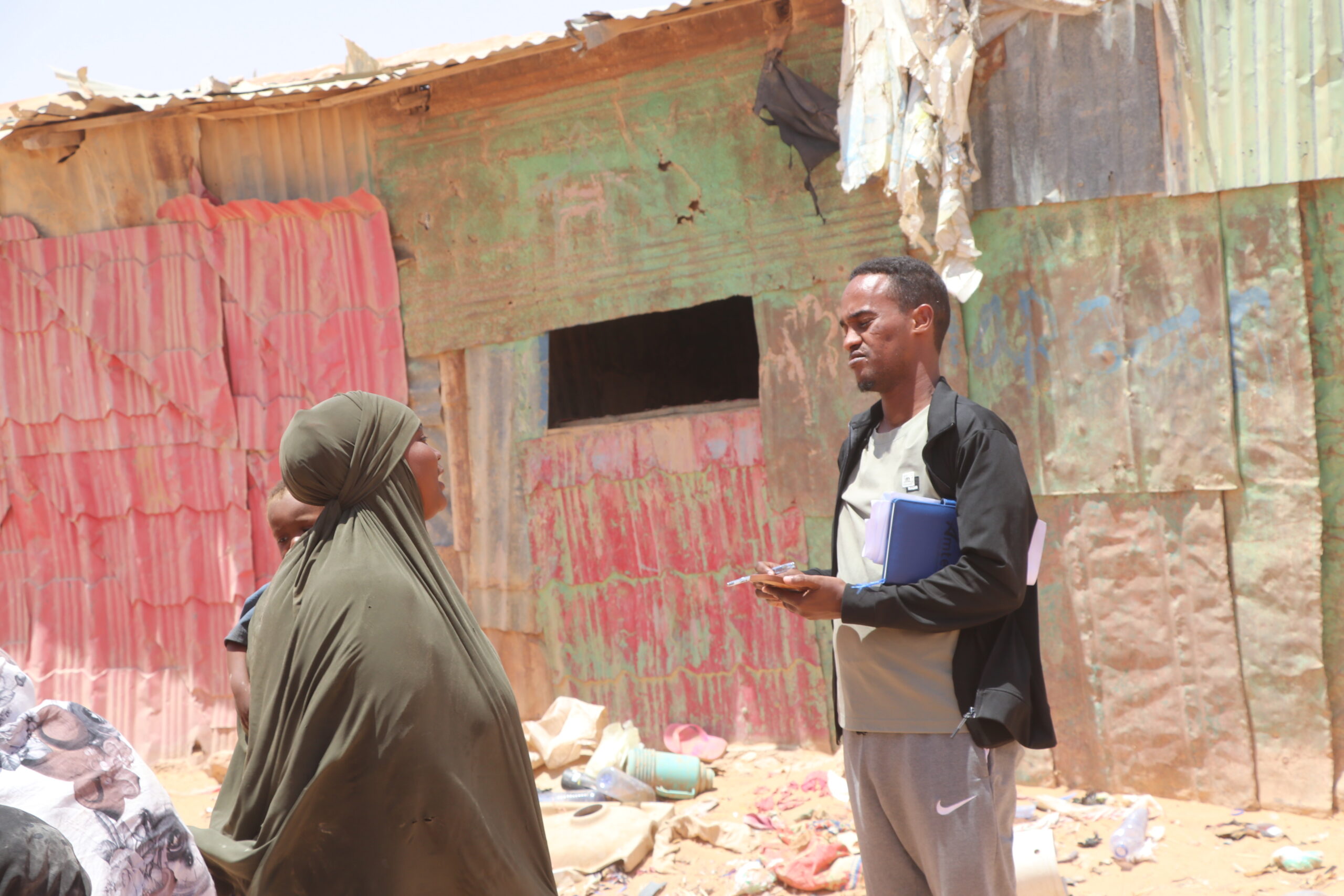
Farxiyo’s family depends on the daily wages earned by her husband, who works in construction. However, she said he has been without work for several months as employment opportunities have become increasingly scarce.
A 2024 study by SIDRA Institute, a research institute based in Garowe, found that unemployment, low incomes, and irregular employment among displaced households significantly limit parents’ ability to cover the costs of their children’s education. The study noted that many parents who depend on low-paid and unreliable jobs cannot afford school expenses, forcing some children to work to support their families instead of attending school.
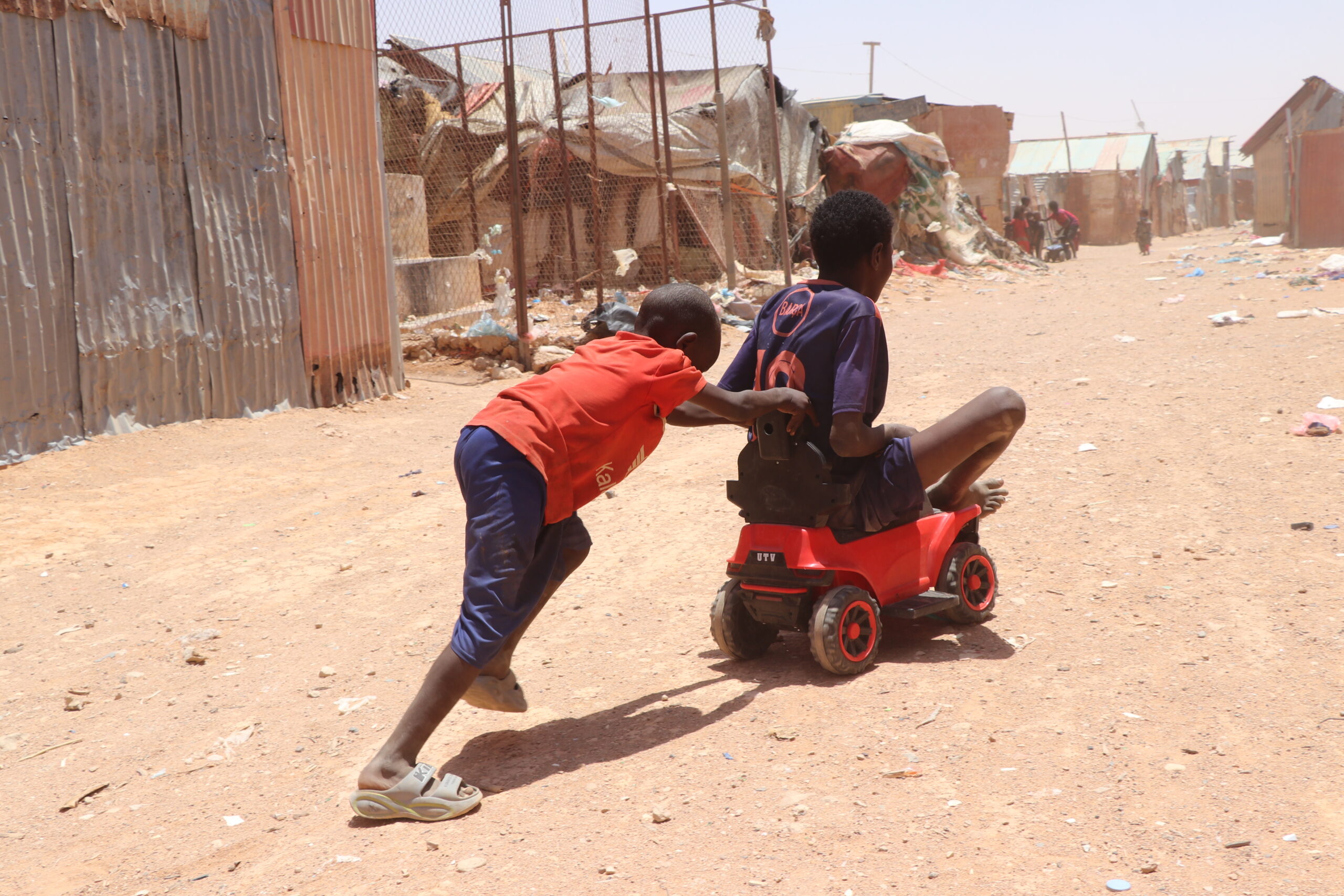
Seven of Farxiyo’s children are between the ages of zero and eight and should have access to Early Childhood Education (ECE). Instead, they currently have no access to ECE services and spend much of their time playing on the dusty streets of the displacement camp.
The impact of the lack of ECE on children
Many children enrolled in schools have not had the opportunity to attend Early Childhood Education (ECE), meaning they begin primary school without the basic literacy and cognitive skills that can help prepare them for learning.
Abdirahman Mohamed Omar, an education expert who has taught in schools for many years, said ECE plays a crucial role in a child’s educational journey and can even influence whether a student develops a positive attitude towards learning.
Studies have shown that, at both primary and secondary school levels, it is possible to see differences between students who have attended ECE and those who have not. For example, students who have gone through ECE often demonstrate a better understanding of what they are learning,
Abdirahman said.
Abdirahman also believes that the benefits of ECE extend beyond academic performance. Children who have attended ECE can differ from those who have not in terms of their behaviour and discipline, skills that can help them adapt to the school environment.
There is also a psychological gap between children who have attended ECE and those who have not. Children who go through ECE are better prepared and supported in their early cognitive development, while those who miss out may find it more difficult to adapt to formal education,
he said.
The situation is particularly challenging for vulnerable children, such as those living in displacement camps, because they face greater obstacles than other children and are growing up in difficult circumstances,
he added.
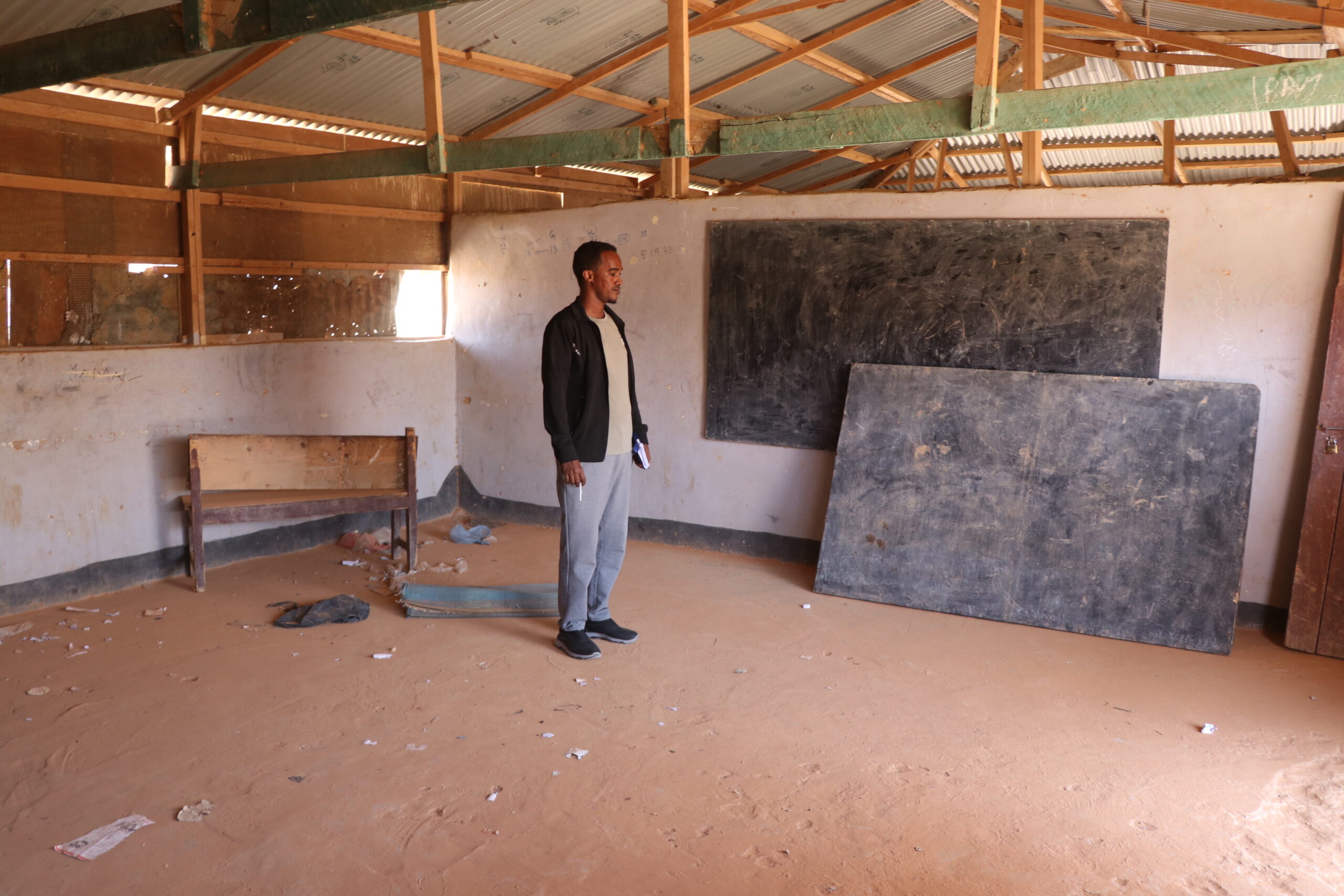
There are no teachers trained in Early Childhood Development (ECD), particularly Early Childhood Education (ECE), at the primary schools in Shabelle displacement camp. Teachers at the camp’s two primary schools lack the specialised skills and training needed to support young children. This raises concerns for children under the age of eight who are enrolled in these schools, as it may affect their educational, social and emotional development, as well as their readiness for primary education.
Mohamed Jama, one of the teachers at a primary school in Shabelle displacement camp, said there is no ECE centre attached to the school or elsewhere in the camp. He also said that teachers have not received specialised training to work with young children who need ECE.
This school has been operating for 17 years, and many displaced children have graduated from it. But children are often brought to us at a very young age, many of them under eight. We face real challenges because they have not attended ECE centres and often find it difficult to sit in the classroom and adapt to first grade,
he said.
The two schools currently operating in the camp face numerous challenges, including an insufficient number of classrooms, too few teachers, broken desks and learning materials, school buildings made of corrugated iron sheets, and a lack of water and adequate sanitation.
There are growing concerns that the schools currently operating in Shabelle Camp could close, as the humanitarian organisations that previously supported them have stopped their assistance and many families can no longer afford school fees. This could leave many children without access not only to ECE, but to education altogether.
In the past, there were organisations that helped provide educational materials, teacher training and teachers’ salaries, but that support has stopped over the past two years. The real danger is that education across the entire camp could come to a standstill,
Mohamed said.
Early Childhood Education missing from Somalia’s humanitarian response
Although Early Childhood Education (ECE) is included in some emergency education programmes in Somalia, its reach remains limited compared with the scale of need among children affected by conflict, displacement and drought. In its Humanitarian Situation Report No. 06, UNICEF reported that during the first part of 2025, Education in Emergencies programmes reached 40,173 students across Galmudug and Puntland. The response also established 10 ECE centres, benefiting 400 children. These figures show that while ECE is part of the humanitarian education response, it remains a relatively small component of efforts to support children affected by crisis
However, this is far from sufficient to meet the needs of thousands of displaced children living in camps, including Shabelle Camp, who require broader support and access to ECE centres. Such programmes provide a foundation for learning, helping prepare children for school and supporting their long-term educational development and academic success.
A report by the Moving Minds Alliance (MMA) found that funding for Early Childhood Development in Emergencies (ECDiE) remains critically low. Between 2018 and 2023, an average of just 3.8% of humanitarian assistance to crisis-affected countries was invested in ECD services. The report found that health and nutrition received more than one-third of ECDiE funding, while “thrive” services—including early learning, parenting support and psychosocial care—received less than 20%.
The report also warned that declining international aid could further widen the funding gap. If current funding patterns remain unchanged, ECDiE could lose an estimated $1.8 billion in funding between 2026 and 2027.
Abdirahman called on government institutions and humanitarian organisations to give greater priority to ECE, particularly for vulnerable children such as those living in displacement camps.
It is important for the government to develop an ECE curriculum framework, syllabus, teacher training materials and training programmes for teachers. Humanitarian organisations supporting displaced communities should also allocate funding to ECE and integrate it into their humanitarian responses, particularly within child protection programmes,
he said.
A 2025 study published by SIDRA Institute found that the suspension of USAID funding had significantly affected education services in Somalia that depend on humanitarian assistance. According to the study, funding cuts disrupted an education programme that had supported 67,072 students and 1,418 teachers.
The findings highlight how dependence on external funding can leave education services vulnerable. When donor support stops, children from the most vulnerable families are among those most at risk of losing access to education.
The role of Puntland’s Ministry of Education
Puntland’s Education Sector Strategic Plan (ESSP) 2017–2021 identified several challenges facing Early Childhood Education (ECE), including insufficient resources and personnel, limited public awareness of the importance of ECE, and a lack of adequately trained teachers, many of whom also receive low salaries. The strategy proposed addressing these challenges by expanding ECE services, improving teacher training and professional development, securing additional funding, and regulating ECE providers, including madrassas and home-based education services.
The strategy also identified children from internally displaced populations (IDPs) as a group requiring particular attention in efforts to expand access to education. It called for increased investment and the use of innovative and flexible approaches to reach children affected by emergencies and those living in displaced communities. However, the ESSP did not provide specific data on the number of displaced children receiving ECE. Instead, it set targets to improve access to and equity in ECE for all children aged three to five and called for an equity study to better understand which groups were being left behind.
During the preparation of this report, no newer or updated ECE-specific strategic plan was available. For this reason, the Puntland Education Sector Strategic Plan (ESSP) 2017–2021 was used as a reference, as it was the most recent strategic document readily available for consultation.
This report was supported by the Moving Minds Alliance (MMA) through the Reporters for Early Childhood in Humanitarian Crisis (REACH Network)