



Garowe-(Puntland Mirror) Somalia is moving decisively to join the Bamako Convention, marking a major step in strengthening Africa’s collective defence against hazardous waste and chemical pollution.
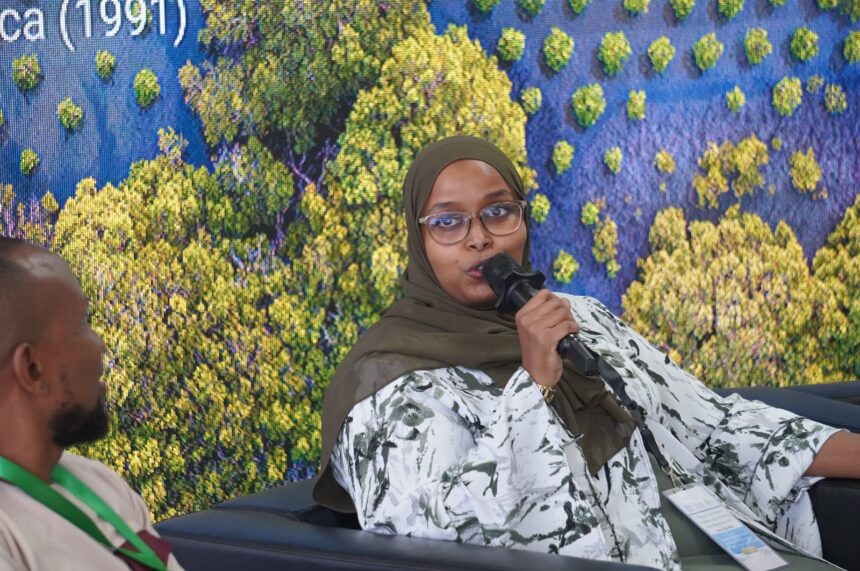
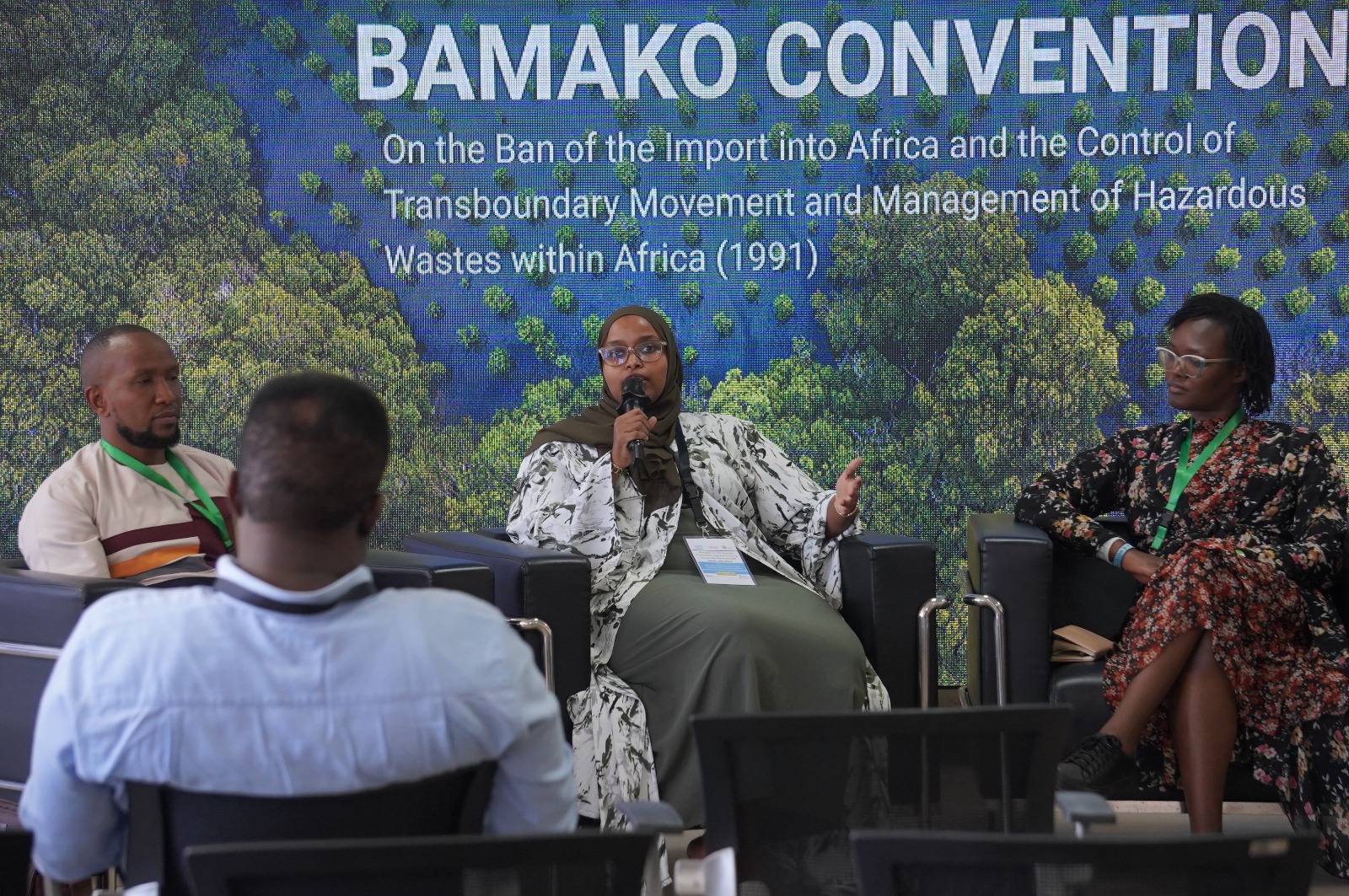
Addressing a dialogue on the Bamako Convention that brought together diplomats, civil society, academics, and students at United States International University–Africa in Kenya, Bushra Ahmed Abdi, Senior Advisor to the Somalia Ambassador on UNON, UNEP and UN-HABITAT, announced that Somalia is moving into the final stages of ratifying the Bamako Convention.
Following Cabinet approval in May 2022, the Federal Republic of Somalia is now advancing the final legal and administrative steps required to accede to the Convention on the Ban of the Import into Africa and the Control of Transboundary Movement and Management of Hazardous Wastes within Africa. The move places Somalia among a growing group of African States choosing prevention over damage control, and asserting their sovereign right to protect people, ecosystems, and national territory from toxic harm.
For Somalia, chemical safety and hazardous waste management are no longer peripheral environmental concerns. They are increasingly treated as matters of public health, national security, and long-term economic resilience. With one of Africa’s longest coastlines and a history of vulnerability to illegal dumping, Somalia has faced heightened risks from hazardous waste flows that exploit weak enforcement and regulatory gaps.
That vulnerability is now being met with institutional reform.
Under Somalia’s National Transformation Plan (2025–2029) and its newly validated Nationally Determined Contribution (NDC 3.0), environmental governance is being systematically mainstreamed into national development planning. The National Environment Policy is operational, while the Environmental Management Bill is nearing completion, embedding the polluter-pays principle into national law. At the sub-national level, cities are implementing new by-laws targeting biomedical and solid waste management, with technical support from partners including UN-HABITAT.
Somalia’s renewed push on chemical safety comes despite its negligible contribution to global emissions—less than 0.02 per cent—underscoring the structural imbalance faced by countries that bear the health and environmental consequences of pollution they did little to generate. The intersection of climate vulnerability and chemical pollution has reinforced the urgency of strengthening waste reporting systems, tightening controls on hazardous imports, and improving monitoring and enforcement capacity.
While Somalia is already a Party to the Basel Convention, the country officials have emphasized the distinct value of the Bamako Convention as an African legal instrument designed not merely to regulate waste movements, but to prevent hazardous waste from entering the continent altogether. For Somali authorities, the Convention represents both a stronger legal barrier and a clear political statement that Africa will no longer serve as a destination for the world’s toxic remnants.
Central to Somalia’s engagement with the Convention is its support for the Bamako Convention Regional Clearing-House Mechanism. The platform is viewed as a critical tool for transparency and enforcement, enabling real-time information sharing, verification of waste movements, and strengthened regional cooperation to detect and deter illegal shipments before they reach national borders. Effective implementation, Somalia has stressed, depends on equipping customs officers, scientists, and local authorities with the digital tools, data access, and institutional authority needed to block unsafe imports.
Somalia’s forthcoming ratification sends a strong signal beyond its borders. It reinforces a broader continental shift toward prevention, accountability, and regional cooperation in hazardous waste governance, and adds momentum to the Bamako Convention’s role as Africa’s frontline defence against environmental dumping.
As it prepares to formally accede, Somalia has reaffirmed its readiness to work with other African States to operationalize the Convention, share information through the Clearing-House Mechanism, and uphold collective standards that protect communities today while safeguarding future generations.
Africa’s message is becoming unmistakable. The era of toxic dumping is closing, and Somalia is positioning itself firmly in the frontline on the side of enforcement, environmental justice, and regional leadership.