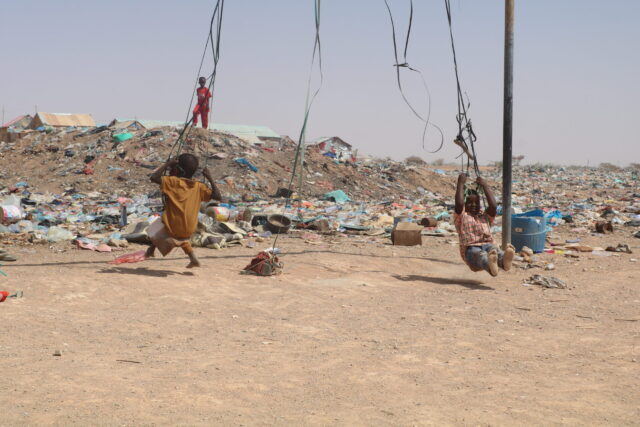




Garowe-(Puntland Mirror) Puntland state in Somalia is facing a worsening drought after the failure of the 2025 Deyr rainy season, with most regions recording far below-normal rainfall, according to a new report by the Puntland Information Management Center for Water and Land Resources (IMC).
The report, released Monday, said the poor October–December rains marked the fourth consecutive failed season, pushing large parts of Puntland into what officials describe as the most severe drought in years.
Only a few locations, including parts of Ceerigaabo, Las’anod and Galdogob, received moderate rainfall, while many districts recorded little or no rain. Water sources have been badly affected, with most berkads and shallow wells dried up, forcing communities to rely almost entirely on a limited number of boreholes. Groundwater levels are falling, and water quality is worsening in several areas.
The drought is affecting an estimated 216,095 households, or about 1.29 million people, placing heavy strain on basic services and livelihoods. Pastoral communities have been hit particularly hard, as shrinking pasture and water shortages weaken livestock and drive unusual movements in search of grazing. Distress sales of animals are rising, while crop failures have been reported across most farming areas because of a lack of irrigation water, the IMC said.
In December, the Puntland government set up a high-level Drought Response Committee chaired by the Vice President Ilyas Osman Lugator and issued a drought appeal to humanitarian partners, calling for urgent support.
The region saw one of its most severe droughts in late 2016 and early 2017, following four straight failed rainy seasons, affecting more than 50% of the population, according to the FAO.
Repeated droughts are increasingly linked to climate change and human activities that damage the environment, such as deforestation, land degradation, overgrazing, and poor management of natural resources, according to the Intergovernmental Panel on Climate Change (IPCC). The panel says rising temperatures and shifting rainfall patterns are making dry spells more frequent and more severe in many parts of the world, including East Africa.